
How the 2026 Nationwide Drought Is Reshaping Farm Risk—And Why Whole Farm Revenue Protection Matters More Than Ever


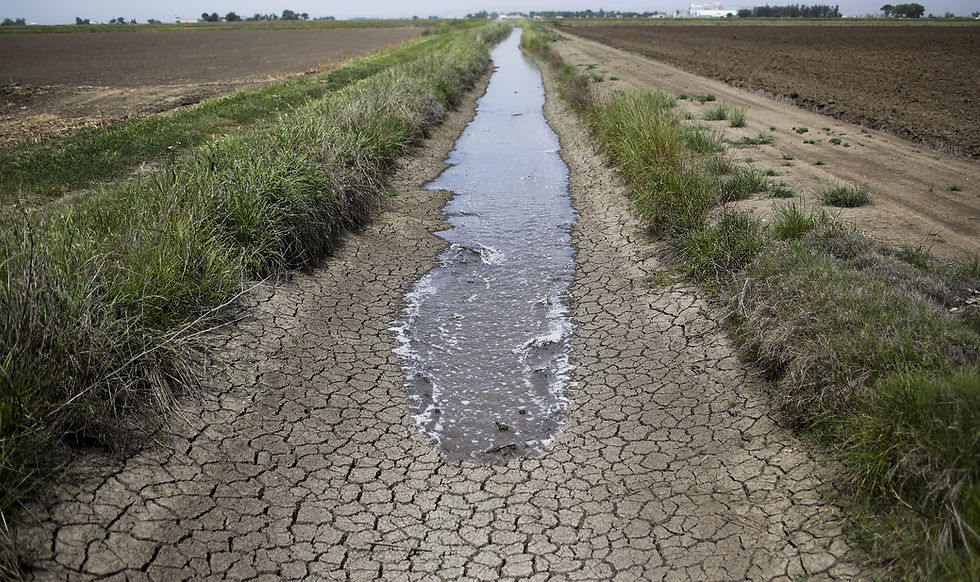
As we move into the early months of 2026, farmers across the United States are facing an increasingly challenging reality: widespread drought conditions that are affecting nearly every link in the water supply chain. From minimal winter precipitation to historically low snowpack, these conditions are creating significant uncertainty for farms large and small. Understanding how drought affects lakes, aquifers, and agricultural water distribution is key to understanding why comprehensive risk management—especially Whole Farm Revenue Protection (WFRP)—is so essential this year.
🌧️A Winter With Far Too Little Water
The U.S. Drought Monitor reports that vast portions of the country have received less than 25% of normal precipitation heading into February 2026. This scarcity has intensified drought conditions across large regions, with even areas that received snow experiencing low snowpack and dry soils that hinder water storage and runoff.
Meanwhile, the western United States is experiencing record‑low snowpack, a critical concern since snowmelt serves as the primary natural reservoir for many key agricultural basins. Reports confirm that states such as Oregon, Colorado, and Utah entered February with record low statewide snowpack, putting pressure on water supplies that are already stretched thin.
🟦What This Means for Lakes and Reservoirs
Lakes and reservoirs across the country depend on steady precipitation and consistent winter snowpack to refill. When both are lacking, storage levels fall—and in 2025–2026, that trend is pronounced.
Data from national drought briefings revealed that reservoirs such as Lake Powell and Lake Mead hit some of their lowest storage levels in 30 years during late 2025, with storage percentages falling far below typical averages. These storage challenges have carried into 2026, limiting available water not only for municipal use but for agricultural irrigation as well.
When farmers depend on surface water allocations from reservoirs, any reduction translates directly into uncertainty for irrigation planning, crop scheduling, and yield expectations.
💧 Aquifers Under Stress
The impacts of drought are often slower to appear underground—but they are no less severe. As streamflow levels decline, aquifers lose one of their primary sources of recharge. USGS monitoring indicates that much of the eastern half of the U.S. is now experiencing below‑normal streamflow, a signal of developing or ongoing hydrological drought. This means groundwater levels are falling, especially in rural agricultural regions that rely heavily on wells during dry years.
Because groundwater recovers far more slowly than lakes or reservoirs, these shortages can have lasting effects, increasing pump costs and in some cases causing wells to run dry.
🌱 Agricultural Water Distribution Under Pressure
Agricultural drought emerges when soil moisture can no longer keep pace with plant demand. Experts note that prolonged dryness reduces root‑zone moisture, leading plants to face water deficits that quickly threaten yield potential.
Soil moisture indicators across much of the eastern and central U.S. show low percentiles, confirming that root‑zone dryness is widespread. Combined with shrinking reservoir allocations and stressed aquifers, the overall water picture for agriculture is tightening rapidly.
This sets the stage for:
Lower crop yields
Increased reliance on supplemental irrigation
Higher fuel and pumping costs
Greater financial volatility across entire farm operations
🌦️ Will the U.S. See a Surge of Moisture This Spring?
Many farmers are holding out hope that spring 2026 will bring the moisture needed to turn conditions around. The reality, however, is more complicated. Outlooks from NOAA and national climate centers show a patchwork pattern, with some regions likely to see improvement—but no widespread, drought‑busting surge of moisture across the country.
Several regions, including the Great Lakes, Ohio Valley, Northern Rockies, Pacific Northwest, and parts of the Southeast, are favored to receive above‑normal precipitation heading into early spring.
A weakening La Niña combined with a strengthening MJO may also help energize storm activity in February, potentially improving conditions slightly in the Northern Rockies and northern High Plains.
However, this improvement is far from universal. Drought is expected to persist or expand across the Southwest, southern California, New Mexico, and parts of the Central and High Plains.
Even in areas where more moisture is likely, winter deficits are large enough that a single season of wetter‑than‑average weather is unlikely to fully restore lost soil moisture, reservoir levels, or groundwater recharge. In short:
Spring 2026 may help—but it won’t fix everything.
Recovery will be slow, uneven, and region‑specific.
🛡️ Why Whole Farm Revenue Protection Is More Essential in 2026
Whole Farm Revenue Protection (WFRP) is one of the most comprehensive federal crop insurance products available, and in a year like 2026, its value becomes crystal clear. Unlike traditional crop‑specific policies, WFRP protects the entire revenue of your operation—covering all commodities under a single policy.
With lakes low, aquifers stressed, and water allocations increasingly uncertain, WFRP helps safeguard against the financial consequences of:
Yield reductions from drought‑stressed crops
Lower production across diversified operations
Market disruptions tied to reduced national supply
The compounding financial risks caused by long‑term water shortages
In other words, when water is unpredictable, farm revenue becomes unpredictable—and WFRP provides the safety net needed to protect your livelihood.
Hasz Insurance Is Here to Help You Prepare for the Year Ahead
The drought conditions shaping early 2026 are not just a weather concern—they’re a financial and operational challenge for farms across the country. Whole Farm Revenue Protection was built for years like this, when uncertainty affects every piece of the operation.
If you want to explore how WFRP can stabilize your revenue in the face of drought, water shortages, or unpredictable growing conditions, Hasz Insurance is here to help you navigate your options.

Comments